

IMPORTANT DATES
Dates for submission of online applications | 09-06-2025 to 04-07-2025 |
Last date and time for receipt of online applications | 04-07-2025 (23:00) |
Last date and time for making online fee payment | 05-07-2025 (23:00) |
Dates of „Window for Application Form Correction‟ including online payment. | 09-07-2025 to 11-07-2025 (23:00) |
Tentative Schedule of Tier-I (Computer Based Examination) | 13 August – 30 August, 2025/ (REVISED SCHEDULE SEPTMBER 2025 ) |
Tentative Schedule of Tier-II (Computer Based Examination) | December 2025 |
Toll Free Helpline Number to be called in case of any difficulty in filling up the Application Form | 18003093063 (Toll Free) |
APPLICATION LINK
2.1 NOT ACTIVATED LAST DATE FOR THE APPLICATION ENDED.
CGL VACANCIES
YEAR | VACANCIES |
2025 | 14,582 |
2024 | 18,174 |
2023 | 8,440 |
2022 | 37,409 |
2021 | 7,621 |
2020 | 7,035 |
2019 | 8,428 |
2018 | 11,271 |
2017 | 9,276 |
APPLICATION FEES FOR SSC CGL
CGL APPLICATION FEE 2025:
4.1 THE CANDIDATES HAVE TO PAY RS 100/- WHILE SUBMITTING THEIR CGL APPLICATION FORM ONLINE AT WWW. SSC.GOV.IN. WOMEN CANDIDATES AND CANDIDATES BELONGING TO SC, ST, PWBD, AND ESM ARE ELIGIBILE FOR RESERVATION AND EXEMPTED FROM THE APPLICATION FEE. THE APPLICATION FEE HAS TO BE PAID ONLINE THROUGH BHIM UPI, NET BANKING, OR USING DEBIT OR CREDIT CARDS
MODE OF EXAM
ONLINE. (COMPUTER BASED EXAM)
MEDIUM OF EXMINATION
6.1: ENGLISH/ HINDI. (NO TELUGU MEDIUM ALLOWED AS PER THE NOTIFICATION OF SSC)
EXAM PATTERN FOR SSC CGL
Tier | Subject | Number of Questions | Maximum Marks | Time allowed |
I | A. General Intelligence and Reasoning | 25 | 50 | 1 hour (1 hour and 20 minutes for the candidates eligible for scribe as per notification) |
B. General Awareness | 25 | 50 | ||
C. Quantitative Aptitude | 25 | 50 | ||
D. English Comprehension | 25 | 50 |
*A penalty of wrong answer: There is a negative marking of 0.50 Marks for each wrong answer.
Tier | Paper | Session | Subject | Number of Questions | Maximum Marks | Time allowed |
II |
Paper-I |
Session-I (2 hours and 15 minutes) | Section-I:
A:Mathematical Abilities
B: Reasoning and General Intelligence. |
30
30
Total = 60 |
60*3 = 180 | 1 hour (For each section) (1 hours and 20 minutes for the candidates eligible for scribe as per notification) |
Section-II:
A: English Language and Comprehension
B: General Awareness |
45
25
Total = 70 |
70*3 = 210 | ||||
Section-III: Computer Knowledge Test | 20 |
20*3 = 60 | 15 Minutes (For Section-III & IV each) (20 minutes for the candidates eligible for scribe as per notification) | |||
Session-II (15 minutes) | Section-IV: Data Entry Speed Test | One Data Entry Task | – | |||
Paper-II |
| Statistics | 100 | 100*2 =200 | 2 hours (2 hours and 40 minutes for the candidates eligible for scribe as notification) |
(There will be negative marking of 1 mark for each wrong answer in Section-I, Section-II and Module-I of Section-III)
7.1: Tier-II will include conducting of Paper-I & Paper-II in separate shifts/ days.
7.2: Paper-I is compulsory for all the posts.
7.3: Paper-II will be for only those candidates who apply for the posts of Junior Statistical Officer (JSO) in the Ministry of Statistics and Programme Implementation and Statistical Investigator Grade-II in the office of Registrar General of India (M/o Home Affairs) and who are shortlisted in Tier-I for these Posts.
7.4: Paper-I will include following four sections as under:
7.4.1 Section-I:
7.4.1.1 A: Mathematical Abilities
7.4.1.2 B: Reasoning and General Intelligence.
7.4.2 Section-II:
7.4.2.1 A: English Language and Comprehension.
7.4.2.2 B: General Awareness.
7.4.3 Section-III: Computer Knowledge Test
7.4.4 Section-IV: Data Entry Speed Test
7.5 It will be mandatory for the candidates to qualify all the Sections of Paper-I separately.
7.6 Data Entry Speed Test (DEST):
7.6.1 Section-IV of Paper-I will include conducting of a Data Entry Speed Test (DEST) for a duration of 15 minutes in Session-II on the same day.
7.6.2 The “Data Entry Speed Test” (DEST) Skill Test will be conducted for a passage of about 2000 (two thousand) key depressions for a duration of 15 (fifteen) minutes. Detailed instructions regarding Skill Test will be provided by the Regional Offices of the Commission. Information about evaluation of Typing Test/DEST is available on the Commission‟s new website https://ssc.gov.in (“For Candidates‟).
7.6.3 DEST will be mandatory for all the posts; however, it will be qualifying in nature.
7.6.4 While shortlisting the candidates for the posts where either Computer Proficiency is prescribed (as mentioned at Para 13.8.9) or where DEST is prescribed viz. Tax Assistant in CBIC, Tax Assistant in CBDT, and UDC/ SSA in Central Bureau of Narcotics (Ministry of Finance) etc., higher qualifying standards will be set in comparison to other posts
7.6.5 DEST will be conducted in the manner decided by the Commission for the purpose.
7.6.6 PwBD-OH candidates are eligible for exemption from attempting DEST, provided such candidates submit a Certificate in the prescribed format (Annexure-XV) to the Commission from the competent Medical Authority, i.e., the Civil Surgeon of a Government Health Care Institution declaring him to be permanently unfit for the Typing Test because of a physical disability. However, such exemption is not available for the posts where either Computer Proficiency is prescribed (as mentioned at Para 13.8.9) or where DEST is prescribed (as mentioned at Para 13.8.10.4) except for the post of the Tax Assistant in CBDT, for which exemption from attempting DEST is available. All other PwBD candidates are not eligible for exemption from DEST.
7.6.7 PwBD/ PwD candidates who are eligible for scribes as per the Notice of Examination will be allowed additional compensatory time of 5 (five) minutes in DEST. Only those VH candidates who opt for scribes in the written examination will be provided passage reader at the time of DEST.
FOR FREE COUNSELLING FOR SSC- CGL CALL: 9030030185/ 86. OR VISIT https://www.everestimpact.live/
https://www.everestimpact.live/new-courses/492-ssc-cgl-mains-batch-2025-live-courses
Indicative Syllabus For SSC CGL
SYLLABUS FOR TIER – I:
8.1 General Intelligence & Reasoning: It would include questions of both verbal and non-verbal type. This component may include questions on analogies, similarities and differences, space visualization, spatial orientation, problem solving, analysis, judgment, decision making, visual memory, discrimination, observation, relationship concepts, arithmetical reasoning and figural classification, arithmetic number series, non-verbal series, coding and decoding, statement conclusion, syllogistic reasoning etc. The topics are, Semantic Analogy, Symbolic/Number Analogy, Figural Analogy, Semantic Classification, Symbolic/Number Classification, Figural Classification, Semantic Series, Number Series, Figural Series, Problem Solving, Word Building, Coding & de-coding, Numerical Operations, symbolic Operations, Trends, Space Orientation, Space Visualization, Venn Diagrams, Drawing inferences, Punched hole/ pattern- folding& un-folding, Figural Pattern-folding and completion, Indexing, Address matching, Date & city matching, Classification of centre codes/roll numbers, Small & Capital letters/numbers coding, decoding and classification, Embedded Figures, Critical thinking, Emotional Intelligence, Social Intelligence.
8.1.1 General Awareness: Questions in this component will be aimed at testing the candidates‟ general awareness of the environment around him and its application to society. Questions will also be designed to test knowledge of current events and of such matters of every day observations and experience in their scientific aspect as may be expected of any educated person. The test will also include questions relating to India and its neighboring countries
especially pertaining History, Culture, Geography, Economic Scene, General Policy & Scientific Research.
8.1.2 Quantitative Aptitude: The questions will be designed to test the ability of appropriate use of numbers and number sense of the candidate. The scope of the test will be computation of whole numbers, decimals, fractions and relationships between numbers, Percentage. Ratio & Proportion, Square roots, Averages, Interest, Profit and Loss, Discount, Partnership Business, Mixture and Alligation, Time and distance, Time & Work, Basic algebraic identities of School Algebra & Elementary surds, Graphs of Linear Equations, Triangle and its various kinds of centres, Congruence and similarity of triangles, Circle and its chords, tangents, angles subtended by chords of a circle, common tangents to two or more circles, Triangle, Quadrilaterals, Regular Polygons, Circle, Right Prism, Right Circular Cone, Right Circular Cylinder, Sphere, Hemispheres, Rectangular Parallelepiped, Regular Right Pyramid with triangular or square base, Trigonometric ratio, Degree and Radian Measures, Standard Identities, Complementary angles, Heights and Distances, Histogram, Frequency polygon, Bar diagram & Pie chart.
8.1.3 English Comprehension: Candidates‟ ability to understand correct English, his basic comprehension and writing ability, etc. would be tested.
8.2 Indicative Syllabus (Tier-II):
8.2.1 Part A of Section-I of Paper-I (Mathematical Abilities):
8.2.1.2 Number Systems: Computation of Whole Number, Decimal and Fractions, Relationship between numbers.
8.2.1.3 Fundamental arithmetical operations: Percentages, Ratio and Proportion, Square roots, Averages, Interest (Simple and Compound), Profit and Loss, Discount, Partnership Business, Mixture and Alligation, Time and distance, Time and work.
8.2.1.4 Algebra: Basic algebraic identities of School Algebra and Elementary surds (simple problems) and Graphs of Linear Equations.
8.2.1.5 Geometry: Familiarity with elementary geometric figures and facts: Triangle and its various kinds of centres, Congruence and similarity of triangles, Circle and its chords, tangents, angles subtended by chords of a circle, common tangents to two or more circles.
8.2.1.6 Mensuration: Triangle, Quadrilaterals, Regular Polygons, Circle, Right Prism, Right Circular Cone, Right Circular Cylinder, Sphere, Hemispheres, Rectangular Parallelepiped, Regular Right Pyramid with triangular or square Base.
8.2.1.7 Trigonometry: Trigonometry, Trigonometric ratios, Complementary angles, Height and distances (simple problems only) Standard Identities like sin2𝜃 + cos2𝜃=1 etc.
8.2.1.8 Statistics and probability: Use of Tables and Graphs: Histogram, Frequency polygon, Bar-diagram, Pie-chart; Measures of central tendency: mean, median, mode, standard deviation; calculation of simple probabilities.
8.2.2 Part B of Section-I of Paper-I (Reasoning and General Intelligence):
8.2.2.1 Questions of both verbal and non-verbal type. These will include questions on Semantic Analogy, Symbolic operations, Symbolic/ Number Analogy, Trends, Figural Analogy, Space Orientation, Semantic Classification, Venn Diagrams, Symbolic/ Number Classification, Drawing inferences, Figural Classification, Punched hole/ pattern-folding & unfolding, Semantic Series, Figural Pattern-folding and completion, Number Series, Embedded figures, Figural Series, Critical Thinking, Problem Solving, Emotional Intelligence, Word Building, Social Intelligence, Coding and decoding, Numerical operations, Other sub-topics, if any.
8.2.3 Part A of Section-II of Paper-I (English Language and Comprehension):
8.2.3.1 Vocabulary, grammar, sentence structure, synonyms, antonyms and their correct usage; Spot the Error, Fill in the Blanks, Synonyms/ Homonyms, Antonyms, Spellings/ Detecting miss-spelt words, Idioms & Phrases, One word substitution, Improvement of Sentences, Active/ Passive Voice of Verbs, Conversion into Direct/ Indirect narration, Shuffling of Sentence parts, Shuffling of Sentences in a passage, Cloze Passage, Comprehension Passage. To test comprehension, three or more paragraphs will be given and questions based on those will be asked. At least one paragraph should be a simple one based on a book or a story and the other two paragraphs should be on current affairs, based on a report or an editorial.
8.2.3.2 Part B of Section-II of Paper-I (General Awareness):
Questions are designed to test the candidates‟ general awareness of the environment around them and its application to society. Questions are also designed to test knowledge of current events and of such matters of everyday observation and experience in their scientific aspect as may be expected of an educated person. The test will also include questions relating to India and its neighboring countries especially pertaining to History, Culture, Geography, Economic Scene, General policy and scientific research.
8.2.2.4 Section-III of Paper-I (Computer Knowledge/ Proficiency):
8.2.2.4.1 Computer Basics: Organization of a computer, Central Processing Unit (CPU), input/ output devices, computer memory, memory organization, back up devices, PORTs, Windows Explorer. Keyboard shortcuts.
8.2.2.4.2 Software: Windows Operating system including basics of Microsoft Office like MS word, MS Excel and Power Point etc.
8.2.2.4.3 Working with Internet and e-mails: Web Browsing & Searching, Downloading & Uploading, Managing an E-mail Account, eBanking
8.2.2.4.4 Basics of networking and cyber security: Networking devices and protocols, Network and information security threats (like hacking, virus, worms, Trojan etc.) and preventive measures.
8.2.2.5 Paper-II (Statistics):
8.2.2.5.1 Collection, Classification and Presentation of Statistical Data – Primary and Secondary data, Methods of data collection; Tabulation of data; Graphs and charts; Frequency distributions; Diagrammatic presentation of frequency distributions.
8.2.2.5.2 Measures of Central Tendency- Common measures of central tendency – mean median and mode; Partition values- quartiles, deciles, percentiles.
8.2.2.5.3 Measures of Dispersion- Common measures dispersion – range, quartile deviations, mean deviation and standard deviation; Measures of relative dispersion.
8.2.2.5.4 Moments, Skewness and Kurtosis – Different types of moments and their relationship; meaning of skewness and kurtosis; different measures of skewness and kurtosis.
8.2.2.5.5 Correlation and Regression – Scatter diagram; simple correlation coefficient; simple regression lines; Spearman‟s rank correlation; Measures of association of attributes; Multiple regression; Multiple and partial correlation (For three variables only).
8.2.2.5.6 Probability Theory – Meaning of probability; Different definitions of probability; Conditional probability; Compound probability; Independent events; Bayes‟ theorem.
8.2.2.5.7 Random Variable and Probability Distributions – Random variable; Probability functions; Expectation and Variance of a random variable; Higher moments of a random variable; Binomial, Poisson, Normal and Exponential distributions; Joint distribution of two random variable (discrete).
8.2.2.5.8 Sampling Theory – Concept of population and sample; Parameter and statistic, Sampling and non-sampling errors; Probability and non-probability sampling techniques (simple random sampling, stratified sampling, multistage sampling, multiphase sampling, cluster sampling, systematic sampling, purposive sampling, convenience sampling and quota sampling); Sampling distribution (statement only); Sample size decisions.
8.2.2.5.9 Statistical Inference – Point estimation and interval estimation, Properties of a good estimator, Methods of estimation (Moments method, Maximum likelihood method, Least squares method), Testing of hypothesis, Basic concept of testing, Small sample and large sample tests, Tests based on Z, t, Chi-square and F statistic, Confidence intervals.
8.2.2.5.10 Analysis of Variance – Analysis of one-way classified data and two-way classified data.
8.2.2.5.11 Time Series Analysis – Components of time series, Determinations of trend component by different methods, Measurement of seasonal variation by different methods.
8.2.2.5.12 Index Numbers – Meaning of Index Numbers, Problems in the construction of index numbers, Types of index number, Different formulae, Base shifting and splicing of index numbers, Cost of living Index Numbers, Uses of Index Numbers.
ELIGIBILITY
EDUCATIONAL QUALIFICATION AS ON 01/08/2025.
9.1 FOR JUNIOR STATISTICAL OFFICER (JSO): BACHELOR’S DEGREE FROM ANY RECOGNISED UNIVERSITY WITH A MINIMUM 60% IN MATHEMATICS IN CLASS 12TH OR IN ANY DISCIPLINE WITH STATSTICS AS ONE OF THE SUBJECTS IN GRADUATION/
9.2 FOR STATISTICAL INVESTIGRATOR GRADE-II: GRADUATION DEGREE FROM ANY RECOGNISED UNIVERSITY WITH ECONOMICS, STATISTICS, OR MATHEMATICS AS A MANDATORY SUBJEC.
9.3 FOR RESEARCH ASSISTANT IN NATIONAL HUMAN RIGHTS COMMISSION (NHRC): BACHELOR’S DEGREE FROM A RECOGNISED UNIVERSITY OR INSTITUTE WITH A MINIMUM OF ONE YEAR OF RESEARCH EXPERIENCE IN ANY RECOGNISED UNIVERSITY OR RECOGNIZED RESEARCH INSTITUTION.
9.4 FOR REMAINING POSTS: DEGREE IN ANY SUBJECT FROM A RECOGNISED UNIVERSITY
CRUCIAL AGE FOR SSC CGL
S No | Age Limit | Remarks |
(i) | For the posts for which age limit is 18-27 years | Candidate must have been born not earlier than 02-08-1998 and not later than 01-08- 2007. |
(ii) | For the posts for which age limit is 20-30 years | Candidate must have been born not earlier than 02-08-1995 and not later than 01-08- 2005. |
(iii) | For the posts for which age limit is 18-30 years | Candidate must have been born not earlier than 02-08-1995 and not later than 01-08- 2007. |
(iv) | For the posts for which age limit is 18-32 years | Candidate must have been born not earlier than 02-08-1993 and not later than 01-08- 2007. |
UPPER AGE LIMIT AND CATEGORY-CODES FOR CLAIMING AGE RELXATION ARE AS FOLOWS
S.NO | Category | Age-relaxation permissible beyond upper age limit |
01 | SC/ST | 05 |
02 | OBC | 03 |
03 | PwBD (Unreserved) | 10 years |
04 | PwBD (OBC) | 13 years |
05 | PwBD (SC/ST) | 15 years |
06 | Ex-Servicemen (ESM) | 3 years after deduction of the military service rendered from the actual age as on 01.08.2025 |
07 | Defence Personnel disabled in operation during hostilities with any foreign country or in a disturbed area and released as a consequence thereof. | 3 years |
08 | Defence Personnel disabled in operation during hostilities with any foreign country or in a disturbed area and released as a consequence thereof (SC/ST). | 8 years |
Additional permissible relaxation in upper age limit for Group „C‟ posts | ||
10 | Central Govt. Civilian Employees who have rendered not less than 3 years regular and continuous service as on closing date for receipt of application. | Up to 40 years of age |
11 | Central Govt. Civilian Employees (SC/ST) who have rendered not less than 3 years regular and continuous service as on closing date for receipt of application. | Up to 45 years of age |
12 | Widows/ Divorced Women/ Women judicially separated and who are not remarried. | Up to 35 years of age |
13 | Widows/ Divorced Women/ Women judicially separated and who are not remarried (SC/ST). | Up to 40 years of age |
PREVOUS YEARS CUT-OFFS OF SSC-CGL
12.1 TIER-1 CUT OFF CGL 2022:
CATEGORY | CUT-OFF FOR 2022 (FOR POSTS OTHER THAN AAO/JSO/ STATSTICAL INVESTIGRATOR GRADE-II) |
SC | 89.08864 |
ST | 77.57858 |
OBC | 114.27651 |
EWS | 102.35275 |
UR | 114.27651 |
ESM | 40.00000 |
OH | 70.69038 |
HH | 40.00000 |
VH | 40.00000 |
PWD-Others | 40.00000 |
12.2 TIER-1 CUT OFF CGL- 2023:
CATEGORY | CUT-OFF FOR 2023(FOR POSTS OTHER THAN AAO/JSO/ STATSTICAL INVESTIGRATOR GRADE-II) |
SC | 126.68201 |
ST | 118.16655 |
OBC | 145.93743 |
EWS | 143.44441 |
UR | 150.04936 |
ESM | 100.29326 |
OH | 115.98466 |
HH | 77.72754 |
VH | 121.59662 |
PWD-Others | 57.45303 |
12.3 TIER – 1 CUT OFF CGL-2024
CATEGORY | JSO CUT OFF | STATSTCAL INVESTIGATOR GRADE-II CUT OFF | OTHER POSTS CUT-OFFS |
SC | 143.53855 | 134.49545 | 126.45554 |
ST | 135.23007 | 134.49545 | 111.8893 |
OBC | 160.65216 | 161.13462 | 146.26291 |
EWS | 161.73406 | 163.50858 | 142.01963 |
UR | 167.02061 | 170.65672 | 153.18981 |
OH | 133.35717 | 113.10008 | 113.10008 |
HH | 95.45162 | 60.66162 | 64.79156 |
VH | 122.51903 | 92.05218 | 102.97465 |
PWD-Others | —- | 40.30795 | 45.74 |
POSTS FILLED THROUGH SSC-CGL
13.1 Pay Level-7 (₹ 44,900 to 1, 42,400):
S. No. | Name of Post. | Ministry/Department/Office/Cadre. | Classification of Post. | Age Limit. |
1. | Assistant Section Officer. | Central Secretariat Service. | Group “B” | 20-30 years |
2. | Assistant Section Officer. | Intelligence Bureau. | Group “B” | 18-30 years |
3. | Assistant Section Officer. | Ministry of Railways. | Group “B” | 20-30 years |
4. | Assistant Section Officer. | Ministry of External Affairs. | Group “B” | 20-30 years |
5. | Assistant Section Officer. | AFHQ. | Group “B” | 20-30 years |
6. | Assistant Section Officer. | Ministry of Electronics and Information Technology. | Group “B” | 18-30 years |
7. | Assistant Section Officer. | Other Ministries/ Departments/ Organizations. | Group “B” | 18-30 years |
8. | Inspector of Income Tax. | CBDT. | Group “C” | 18-30 years |
9. | Inspector, (Central Excise). | CBIC. | Group “B” | 18-30 years |
10. | Inspector (Preventive Officer). | Group “B” | 18-30 years | |
11. | Inspector (Examiner). | Group “B” | 18-30 years | |
12. | Assistant Enforcement Officer. | Directorate of Enforcement, Department of Revenue. | Group “B” | 18-30 years |
13. | Sub Inspector | Central Bureau of Investigation | Group “B” | 20-30 years |
14. | Inspector Posts. | Department of Posts, Ministry of Communications. | Group “B” | 18-30 years |
15. | Inspector. | Central Bureau of Narcotics, Ministry of Finance. | Group “B” | 18-30 years |
16. | Section Head. | Director General of Foreign Trade. | Group “B” | 18-30 years |
13.2 2 Pay Level-6 (₹ 35,400 to 1, 12,400):
S. No. | Name of Post. | Ministry/Department/Office/Cadre. | Classification of Post. | Age Limit. |
17 | Assistant / Assistant Section Officer. | Other Ministries/ Departments/ Organizations. | Group “B” | 18-30 years |
18 | Executive Assistant. | CBIC. | Group “B” | 18-30 years |
19 | Research Assistant. | National Human Rights Commission (NHRC). | Group “B” | 18-30 years |
20 | Divisional Accountant. | Offices under C&AG. | Group “B” | 18-30 years |
21 | Sub Inspector. | National Investigation Agency (NIA). | Group “B” | 18-30 years |
22 | Sub-Inspector/ Junior Intelligence Officer. | Narcotics Control Bureau (MHA). | Group “B” | 18-30 years |
23 | Junior Statistical Officer. | Ministry of Statistics & Programme Implementation. | Group “B” | 18-32 years |
24 | Statistical Investigator Grade-II. | Ministry of Home Affairs. | Group “B” | 18-30 years |
25 | Office Superintendent. | CBDT. | Group “B” | 18-30 years |
13.3 Pay Level-5 (₹ 29,200 to 92,300):
S. No. | Name of Post. | Ministry/Department/Office/Cadre. | Classification of Post. | Age Limit. |
26 | Auditor. | Offices under C&AG. | Group “C” | 18-27 years |
27 | Auditor. | Offices under CGDA. | Group “C” | 18-27 years |
28 | Auditor. | Other Ministry/ Departments. | Group “C” | 18-27 years |
29 | Accountant. | Offices under C&AG. | Group “C” | 18-27 years |
30 | Accountant. | Controller General of Accounts. | Group “C” | 18-27 years |
31 | Accountant/ Junior Accountant. | Other Ministry/ Departments. | Group “C” | 18-27 years |
13.4 Pay Level-4 (₹ 25,500 to 81,100):
S. No. | Name of Post. | Ministry/Department/Office/Cadre. | Classification of Post | Age Limit |
32 | Postal Assistant/ Sorting Assistant. | Department of Posts, Ministry of Communications. | Group “C” | 18-27 years |
|
33 |
Senior Secretariat Assistant/ Upper Division Clerks. |
Central Govt. Offices/ Ministries other than CSCS cadres. |
Group “C” |
18-27 years |
|
34 |
Senior Administrative Assistant. |
Military Engineering Services, Ministry of Defence. |
Group “C” |
18-27 years |
|
35 |
Tax Assistant. |
CBDT. |
Group “C” |
18-27 years |
|
36 |
Tax Assistant. |
CBIC. |
Group “C” |
18-27 years |
|
37 |
Sub-Inspector. |
Central Bureau of Narcotics, Ministry of Finance. |
Group “C” |
18-27 years |
SALARY FOR SSC-CGL
14.1 (LEVEL 7: 44,900)
14.1.1 Monthly Salary Calculation of basic pay Rs. 44,900 Level 7 (4800 GP) for the employees working in the X Class (HRA 30%) and TPTA Classified cities as on 30th August 2025.
|
BASIC SALARY |
44,900 |
|
DA (55%) |
24,695 |
|
HRA (30%) |
13,470 |
|
TRANSPORT ALLOWANCE |
3,600 |
|
DA ON TRANSPORT ALLOWANCE |
1,908 |
|
GROSS SALARY |
88,645. |
14.1.2 Monthly Salary Calculation of basic pay Rs. 44,900 Level 7 (4800 GP) for the employees working in the Y Class (HRA 20%) and TPTA Classified cities as on 30th August 2025.
|
BASIC SALARY |
44,900 |
|
DA (55%) |
24,695 |
|
HRA (20%) |
8,980 |
|
TRANSPORT ALLOWANCE |
3,600 |
|
DA ON TRANSPORT ALLOWANCE |
1,908 |
|
GROSS SALARY |
84,155 |
14.1.3 Monthly Salary Calculation of basic pay Rs. 44,900 Level 7 (4800 GP) for the employees working in the Z Class (HRA 10%) and TPTA Classified cities as on 30th August 2025.
BASIC SALARY | 44,900 |
DA (55%) | 24,695 |
HRA (10%) | 4,490 |
TRANSPORT ALLOWANCE | 3,600 |
DA ON TRANSPORT ALLOWANCE | 1,908 |
GROSS SALARY | 76,875. |
14.2 (LEVEL 6: 35,400)
14.2.1 Monthly Salary Calculation of basic pay Rs. 35,400 Level 6 (4200 GP) for the employees working in the Z Class (HRA 30%) and TPTA Classified cities as on 30th August 2025.
BASIC SALARY | 35,400 |
DA (55%) | 19,470 |
HRA (30%) | 10,620 |
TRANSPORT ALLOWANCE | 3,600 |
DA ON TRANSPORT ALLOWANCE | 1,980 |
GROSS SALARY | 71,070 |
14.2.2 Monthly Salary Calculation of basic pay Rs. 35,400 Level 6 (4200 GP) for the employees working in the Y Class (HRA 20%) and TPTA Classified cities as on 30th August 2025.
BASIC SALARY | 35,400 |
DA (55%) | 19,470 |
HRA (20%) | 7,080 |
TRANSPORT ALLOWANCE | 3,600 |
DA ON TRANSPORT ALLOWANCE | 1,980 |
GROSS SALARY | 67,530 |
14.2.3 Monthly Salary Calculation of basic pay Rs. 35,400 Level 6 (4200 GP) for the employees working in the Z Class (HRA 10%) and TPTA Classified cities as on 30th August 2025.
BASIC SALARY | 35,400 |
DA (55%) | 19,470 |
HRA (10%) | 3,540 |
TRANSPORT ALLOWANCE | 3,600 |
DA ON TRANSPORT ALLOWANCE | 1,980 |
GROSS SALARY | 61,200 |
14.3 LEVEL-5 (29,200)
14.3.1 Monthly Salary Calculation of basic pay Rs. 29,200 Level 5 (2800 GP) for the employees working in the X Class (HRA 30%) and TPTA Classified cities as on 30th August 2025.
BASIC SALARY | 29,200 |
DA (55%) | 16,060 |
HRA (30%) | 8,760 |
TRANSPORT ALLOWANCE | 3,600 |
DA ON TRANSPORT ALLOWANCE | 1,980 |
GROSS SALARY | 59,600 |
14.3.2 Monthly Salary Calculation of basic pay Rs. 29,200 Level 5 (2800 GP) for the employees working in the Y Class (HRA 20%) and TPTA Classified cities as on 30th August 2025.
|
BASIC SALARY |
29,200 |
|
DA (55%) |
16,060 |
|
HRA (20%) |
5,840 |
|
TRANSPORT ALLOWANCE |
3,600 |
|
DA ON TRANSPORT ALLOWANCE |
1,980 |
|
GROSS SALARY |
53,890 |
14.3.3 Monthly Salary Calculation of basic pay Rs. 29,200 Level 5 (2800 GP) for the employees working in the Z Class (HRA 10%) and TPTA Classified cities as on 30th August 2025.
|
BASIC SALARY |
29,200 |
|
DA (55%) |
16,060 |
|
HRA (10%) |
2,920 |
|
TRANSPORT ALLOWANCE |
3,600 |
|
DA ON TRANSPORT ALLOWANCE |
1,980 |
|
GROSS SALARY |
50,970 |
14.4 (LEVEL-4: 25,500):
14.4.1: Monthly Salary Calculation of basic pay Rs. 25,500 Level 4 (2400 GP) for the employees working in the Z Class (HRA 30%) and TPTA Classified cities as on 30th August 2025.
|
BASIC SALARY |
25,500 |
|
DA (55%) |
14,025 |
|
HRA (30%) |
7,650 |
|
TRANSPORT ALLOWANCE |
3,600 |
|
DA ON TRANSPORT ALLOWANCE |
1,980 |
|
GROSS SALARY |
52,755 |
14.4.2: Monthly Salary Calculation of basic pay Rs. 25,500 Level 4 (2400 GP) for the employees working in the Y Class (HRA 20%) and TPTA Classified cities as on 30th August 2025.
BASIC SALARY | 25,500 |
DA (55%) | 14,025 |
HRA (20%) | 5,100 |
TRANSPORT ALLOWANCE | 3,600 |
DA ON TRANSPORT ALLOWANCE | 1,980 |
GROSS SALARY | 50,205 |
14.4.3: Monthly Salary Calculation of basic pay Rs. 25,500 Level 4 (2400 GP) for the employees working in the Z Class (HRA 10%) and TPTA Classified cities as on 30th August 2025.
BASIC SALARY | 25,500 |
DA (55%) | 14,025 |
HRA (10%) | 2,500 |
TRANSPORT ALLOWANCE | 3,600 |
DA ON TRANSPORT ALLOWANCE | 990 |
GROSS SALARY | 44,865 |
MOCK TESTS FOR SSC-CGL
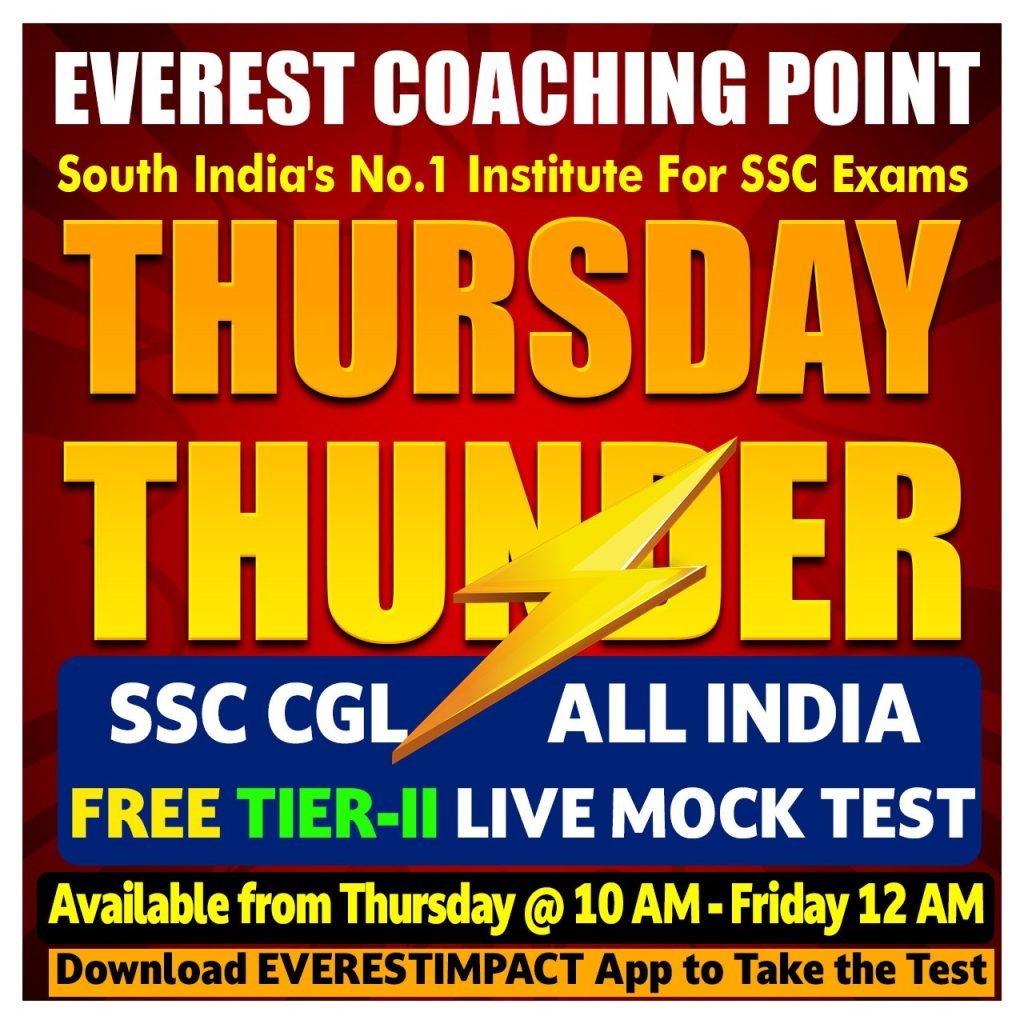
*EVEREST COACHING POINT CONDUCTING HIGH QUALITY DAILY MOCK TESTS FOLLOWED BY VIDEO EXPLANATION.
*WEEKLY ALL-INDIA MOCK TESTS. STARTS FROM WEDNESDAY 6:00 PM TO SATURDAY 11:59 PM (EVERY WEEK).
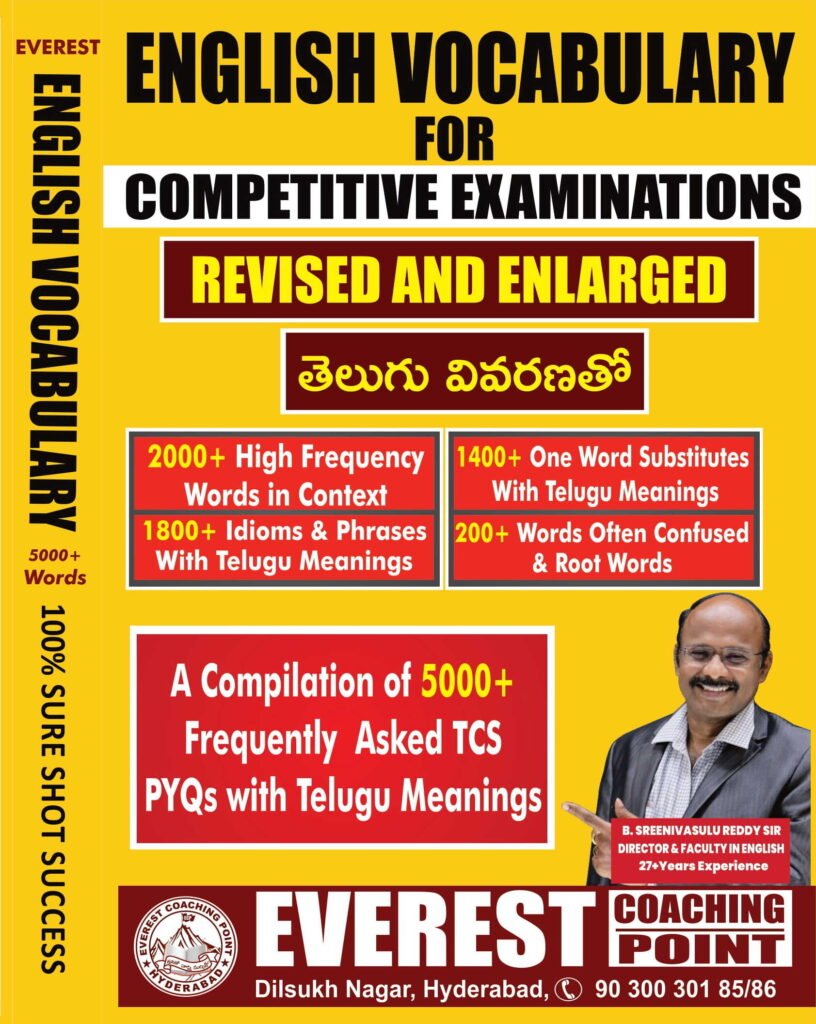
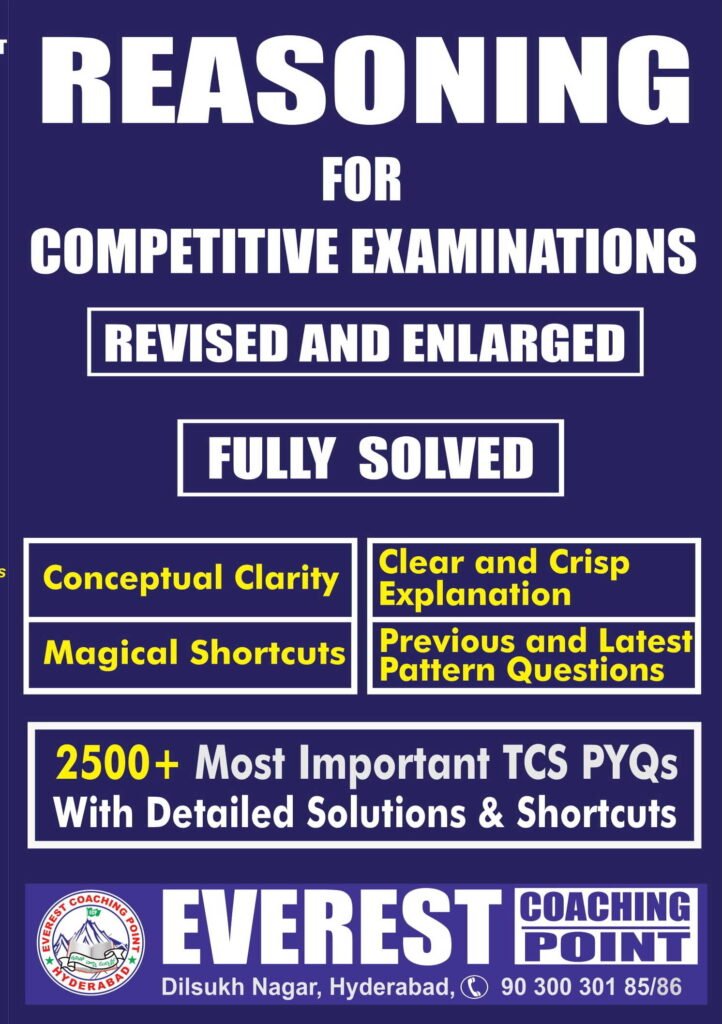
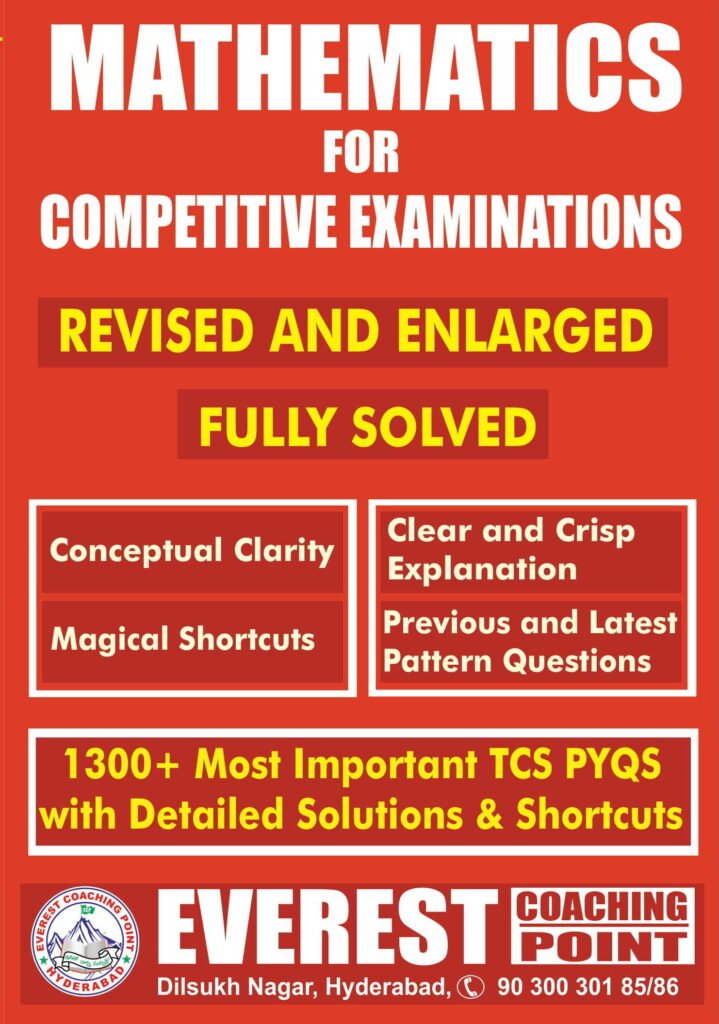
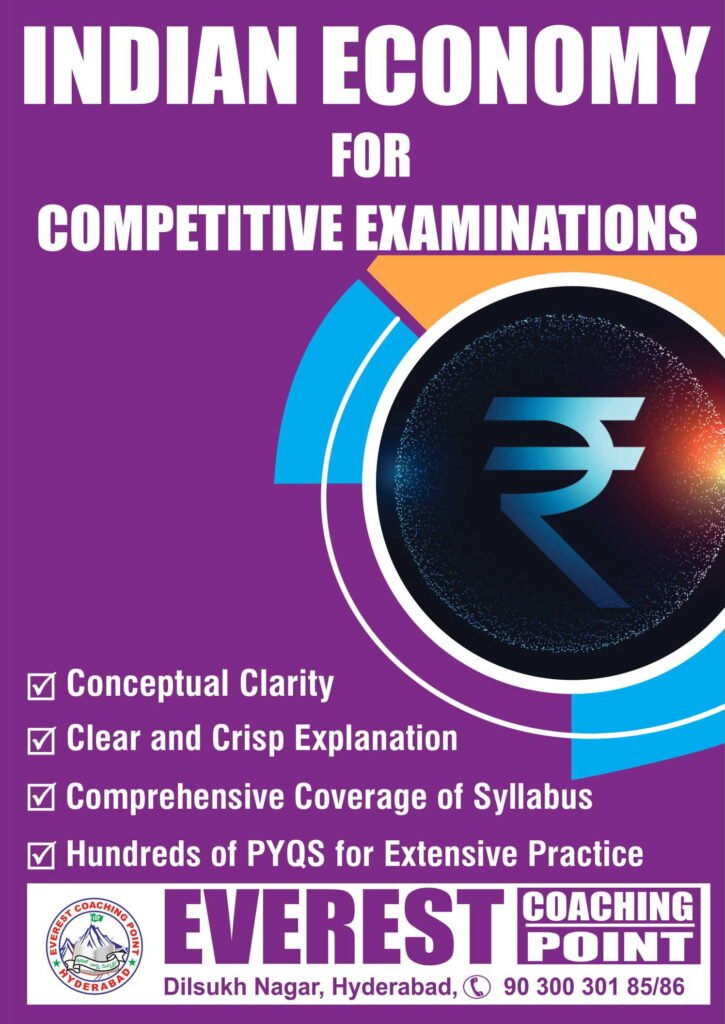
BEST BOOKS FOR CGL PREPARATION
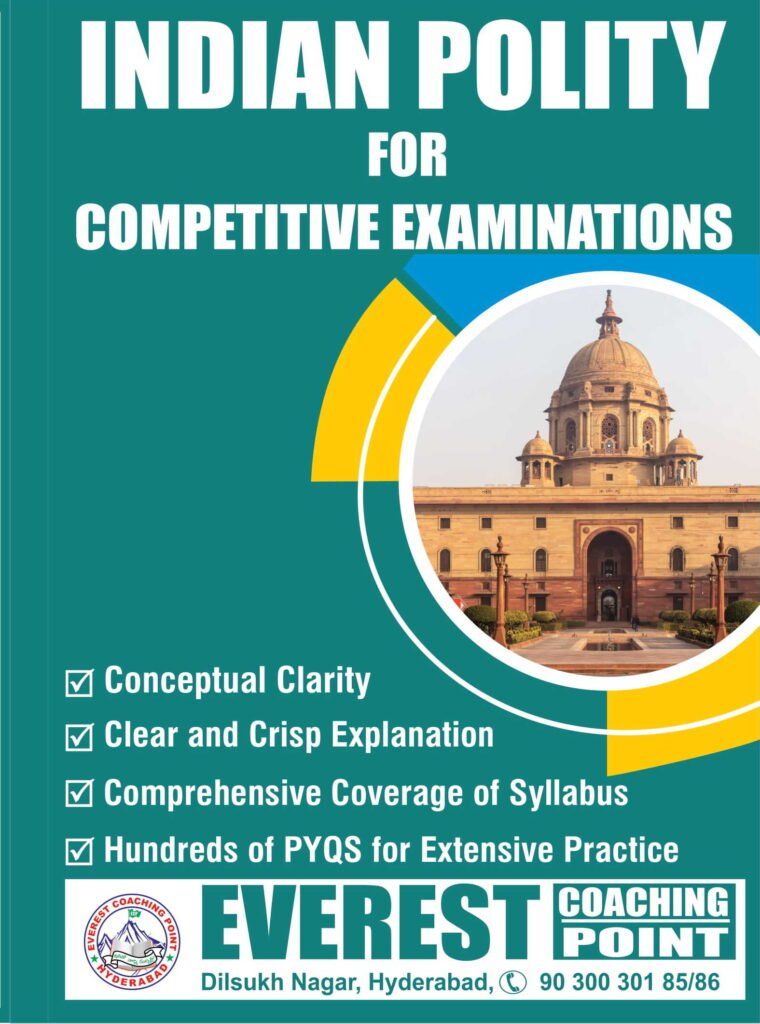
ADMIT CARD FOR CGL 2025/ CITY INFORMATION FOR CGL 2025:
*THE CITY INFORMATION FOR CGL 2025 WILL BE AVAILABLE IN THE COMMISSION WEBSITE SSC.GOV.IN 7 TO 10 DAYS BEFORE THE EXAM.
*Exams Will be Conducted from 12 -09-2025 to 26-09-2025.
*THE ADMIT CARDS AVAILABLE IN THE COMMISSION WEBSITE SSC.GOV.IN 3 TO 4 DAYS BEFORE THE EXAM.
*download your admit from the above link from septmber 09/2025.
CGL EXAMINATION CENTERS IN ANDHRA PRADESH AND TELAGANA.
|
ANDHRA PRADESH |
TELAGANA |
|
Chirala ,Guntur , Kakinada , Kurnool , Nellore , Rajahmundry , Tirupati , Vizianagaram , Vijayawada , Vishakhapatnam , Srikakulam , Eluru, Ongole . |
Hyderabad , Karimnagar , Warangal , |
CGL NOTIFICATION PDF.
*LINK FOR CGL NOTIFICATION PDF:

Everest Coaching Point Hyderabad – SSC Coaching FAQs
Everest Coaching Point is highly rated because of its experienced faculty, structured study plans, updated SSC exam material, and regular doubt-clearing sessions. It consistently produces top SSC CGL, CHSL, and MTS rankers in Hyderabad.
Yes, Everest Coaching Point offers dedicated courses for SSC CGL, CHSL, MTS, GD Constable, and other SSC exams, with both offline classroom coaching and online live classes.
Daily practice tests & weekly mock exams
Bilingual teaching (English & Telugu/Hindi)
Updated study material based on latest SSC syllabus
Personalized doubt-solving & mentoring
Affordable fee structure with EMI options
Yes, along with classroom sessions, Everest Coaching Point provides live online SSC classes, recorded lectures, and free practice tests, making it one of the best options for working professionals and outstation students.
Everest Coaching provides a step-by-step strategy for SSC CGL including concept building, topic-wise practice, PYQ analysis, and All India level mock tests to track performance before the actual exam.
The SSC coaching fee at Everest Coaching Point is affordable compared to other institutes in Hyderabad, with options for full courses, crash batches, and online-only programs. Fee details can be confirmed by contacting the institute directly.
Yes, Everest Coaching Point provides special free live SSC mock tests regularly for aspirants preparing for SSC CGL, CHSL, and MTS exams.
You can prepare for:
SSC CGL (Combined Graduate Level)
SSC CHSL (Combined Higher Secondary Level)
SSC MTS (Multi-Tasking Staff)
SSC GD Constable
SSC CPO (SI in Delhi Police & CAPFs)
Yes, even if you are starting fresh, Everest Coaching Point provides foundation batches, covering basics of Quant, Reasoning, English, and GK from scratch.
Everest Coaching Point is located in Hyderabad with accessible branches. Students from across the city prefer it due to its proven track record in SSC exam success.